Your Ears Are Being Lied To: The Retro Synth Takeover of Modern Scores
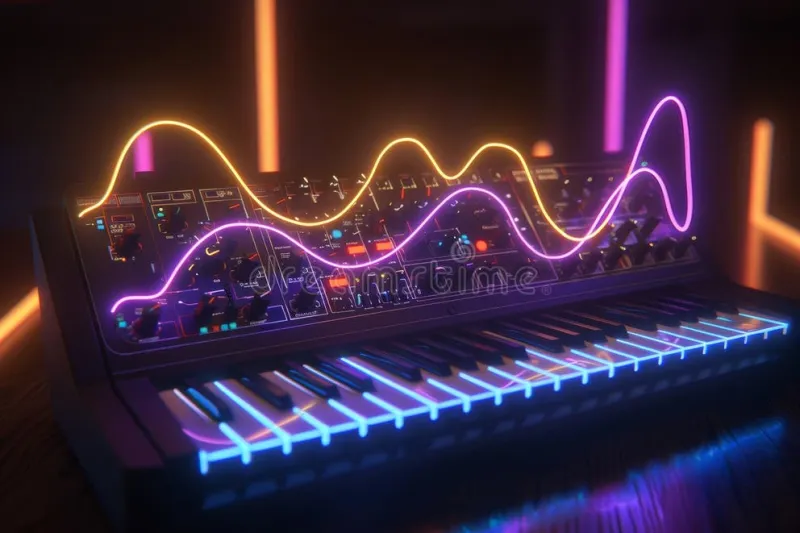
Photo: vintage analog synthesizer keyboard moody neon lighting, via thumbs.dreamstime.com
Close your eyes during the opening minutes of almost any streaming sci-fi show and listen. There it is: a warm, slightly detuned analog pad, a pulsing bass arpeggio, maybe a glockenspiel that sounds like it escaped from a John Hughes movie. You've just been teleported to 1985 without a single line of dialogue explaining why.
The retro synth score went from a novelty to the default setting of American blockbuster culture, and honestly? It's time we talked about what that sound is actually doing to us.
The Stranger Things Effect
Let's give credit where it's due. When Netflix's biggest show dropped in 2016, its score — built by the Austin-based duo S U R V I V E — felt like a genuine artistic choice. The analog synths weren't just set dressing; they were a thesis statement. The show was arguing that childhood adventure, Cold War paranoia, and '80s creature features were all part of one continuous feeling, and the music was the glue.
The problem is what happened next. Studios heard the reaction, reverse-engineered it, and started ordering scores the way you order at a drive-thru: one nostalgia burger, hold the originality.
Now the arpeggiator is everywhere. Streaming thrillers use it to signal "this is moody and cool." Action movies use it to signal "remember when movies were better?" Even shows set in the present day reach for the DX7 presets, as if the mere sound of a Juno-106 can substitute for a personality.
Nostalgia on Easy Mode
Here's my issue, and I'll admit it's partly a complaint about myself: the retro synth score lets me skip the work of actually feeling something.
A great score earns its emotional weight by accompanying story beats that matter. Think of John Williams's five-note motif in Close Encounters — the melody is the plot. But when a score opens with a foggy synth pad and a slow-motion shot of a kid on a bike, my brain completes the circuit before the film has done anything to deserve it. Oh, this is about the loss of innocence. Got it. Thanks, Oberheim.
It's nostalgia pre-chewed. The music tells me what to feel about a past the movie hasn't even depicted yet. That's a shortcut, and shortcuts in storytelling tend to catch up with you — usually around the second season, when the synth swells are still going but the writing has checked out.
The Maverick Problem
Top Gun: Maverick is a fascinating case study, because it sits right on the fault line. Harold Faltermeyer — the actual '80s guy who scored the original — came back, and the film leans hard into synth pulses and guitar heroics. It works! But notice what it's working with: practical effects, real cockpits, actors visibly getting slammed around by G-forces. The retro sound sits on top of something tactile and earned.
That's the difference between pastiche and homage. When the filmmaking is doing real work, the '80s sonic wallpaper reads as affection. When it isn't, the same sounds read as a replacement for effort — a mood ring for franchises.
The Composers Pushing Back
The good news: a counter-movement is underway, and it's coming from some unexpected places.
Listen to what Ludwig Göransson did with Oppenheimer — all violin strings and uneasy, physical textures, a sound designed to make you squirm rather than reminisce. Or the way Mica Levi's scores for Under the Skin and Zola-adjacent projects feel genuinely alien, built from sounds that don't map to any decade. Hildur Guðnadóttir turned a cello into a weapon in Joker and built entire soundscapes out of recorded Chernobyl environments. None of these scores ask you to remember. They ask you to sit in the present tense and be uncomfortable.
Even within genre TV, there's a quiet rebellion. Some of the most interesting scores of the last few years have leaned into dissonance, extended technique, and pure weirdness — sounds with no nostalgia attached, which means the story has to actually earn your feelings.
So What Do We Do About It?
I'm not calling for a ban on synthesizers. Analog synths are beautiful instruments, and the '80s revival gave us some genuinely great music. The issue is asymmetry: when one sonic palette becomes the industry's emotional default, it stops meaning anything. A synth arpeggio used to signal something specific. Now it signals a budget line.
So here's my modest proposal for the nerd writer's listening habits: next time you start a new show, pay attention to the first five minutes of score and ask yourself one question. Is this music telling me about this story, or is it telling me about other stories I already love?
If it's the latter, stay alert. Because a score that hands you your feelings in advance is a score that knows it doesn't have any of its own.