Bottoms Up, Nerd: The Strange Joy of Drinking Fiction
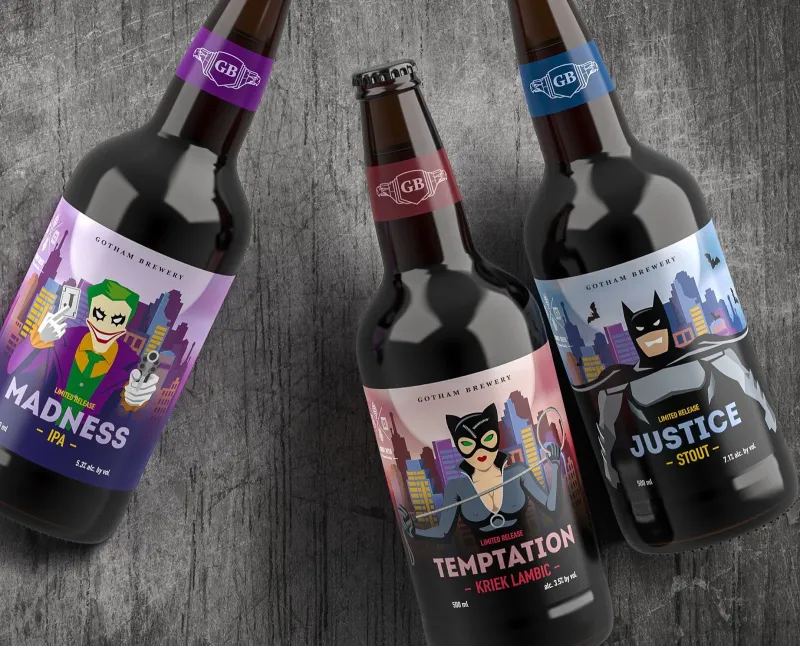
Photo: themed novelty beer bottle fictional brand merchandise, via i.pinimg.com
There's a moment, standing in the Universal Orlando summer heat with a $9 cup of Butterbeer sweating in your hand, when you realize something slightly unhinged has happened to fandom. You didn't just watch Harry Potter. You didn't just buy the wand. You are now ingesting the franchise.
And honestly? You're not alone. The market for fictional food and drink — products that started life as set dressing, punchlines, or world-building flavor text — has ballooned into what analysts estimate is a $2 billion business. Duff Beer is on actual shelves in actual grocery stores. Better Call Saul spawned a real Los Pollos Hermanos seasoning line. Spider-Man has cereal. Bob's Burgers has a cookbook. At this point, if a fictional character has ever taken a swig of something, somebody has probably tried to bottle it for you.
The question worth asking isn't whether this is a cash grab — of course it's a cash grab, everything is — but why it works so well. Why does edible merch hit different than a t-shirt?
Merch You Can't Just Look At
Fandom merchandise has always been about proximity. A poster puts the world on your wall. A Funko Pop condenses a character into something you can own. But food and drink go a step further, because consumption is participatory. You're not displaying the fiction. You're putting it inside your body.
That's a fundamentally different relationship, and the entertainment industry figured it out faster than most of us noticed. The old model — the one that started with Star Wars action figures in 1977 and basically invented modern licensing — treated fans as collectors. You accumulated objects about the thing. The edible model treats fans as residents. You're not memorabilia-ing the world; you're tasting it.
There's a reason the Butterbeer rollout was such a masterstroke. J.K. Rowling's books described the drink in loving, specific detail — the foamy topping, the warming sensation — and for decades it existed only in readers' imaginations. When Universal finally made it real in 2010, they weren't selling a beverage. They were selling the answer to a question fans had been asking themselves since 1997: what does it actually taste like?
That's the secret sauce, so to speak. The best fictional food merch doesn't invent a product. It completes one.
The Punchline Problem (and How It Got Solved)
Here's what makes the current wave especially interesting: some of the most successful examples started as jokes. Duff Beer was invented as a satire of lazy American lager culture — a brand so aggressively mediocre it was funny. Los Pollos Hermanos was a front for a meth empire. These weren't aspirational products. They were punchlines.
Turning a gag into a grocery item requires a kind of narrative alchemy. The trick, it turns out, is that fans don't want the product — they want the context. Nobody buys Los Pollos Hermanos chicken seasoning because they think it's good fried chicken seasoning. They buy it because, for the length of a dinner, they get to be in on the joke. The product is a punchline you can serve to guests.
Compare that to the older, cruder era of movie tie-ins — the Burger King glasses, the cereal box cross-promotions. Those said "this movie exists." The new wave of in-world products says "this world exists." One is advertising. The other is a portal.
Watching vs. Living
Which brings us to the slightly uncomfortable part. The reason fictional food works is the same reason it's worth examining: audiences increasingly want to inhabit franchises rather than just watch them.
Streaming flattened the viewing experience into a transaction — press play, consume, repeat. In response, fandom has pushed toward the physical and the embodied. Ren faires, cosplay, themed bars, immersive theater, the whole experience economy. Edible merch is the most accessible version of that. You don't need a costume or a park ticket. You need a fridge.
Is that healthy? Mostly, sure — it's beer and cereal, not a personality transplant. But there's a real blurring happening between consuming media and consuming the brand of media, and the industry has every incentive to keep them indistinguishable. When your fandom lives in your pantry, you're never really done watching. Every trip to the kitchen is a touchpoint.
Still, I'd argue the impulse underneath it is a generous one. Wanting to taste Butterbeer is wanting the world to be real — wanting the story to extend past the credits and into the mundane business of being a person who has to eat lunch anyway. Fictional food merch says: the thing you loved was never just on a screen.
So sure, I'll take the Duff. Not because it's good. Because for one sip, Springfield is real, and honestly, we could all use a little more of that.
Even if it does taste like a punchline.