Comfort Food TV: The Psychology of Pressing Play on the Same Show for the Fifth Time
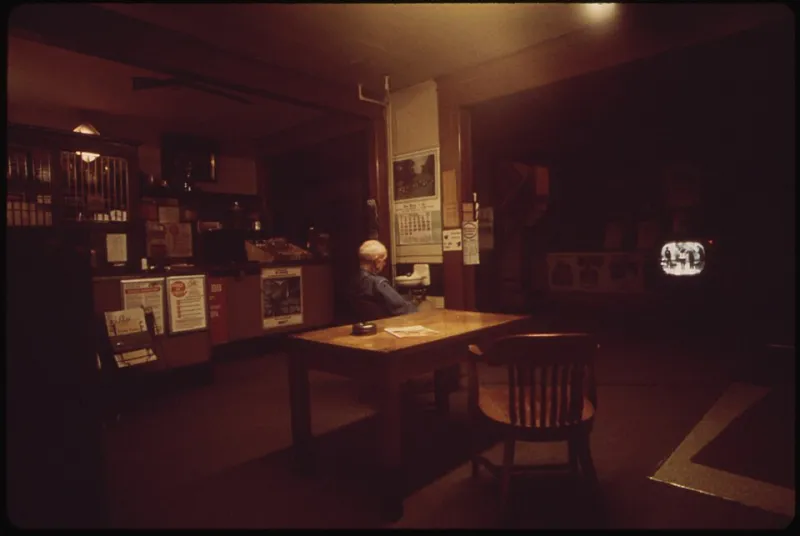
Photo: David Hiser, Public domain, via Wikimedia Commons
Last Tuesday, I opened my streaming app with every intention of starting that buzzy new limited series everyone's been yelling about. Instead, I watched three episodes of a sitcom I have seen so many times I can hear the laugh track before it happens. Sound familiar?
We've turned the rewatch into an art form, and honestly, nobody wants to talk about why.
The Rewatch Was Always There. The Algorithm Just Noticed.
Rewatching isn't new. Syndication built American television on it — entire generations learned The Office and Seinfeld through reruns at 6 p.m. on random local channels. What's changed is the intentionality. Streaming platforms figured out that a rewatch is the easiest engagement win in the business. You've already proven you like it. There's no marketing spend required. The homepage algorithmically nudges you back toward the familiar because the familiar is a guaranteed click.
The result is a strange feedback loop: we rewatch because it's easy, and it's easy because the machine has learned that we will. The queue of unwatched prestige dramas grows. The comfort show accumulates viewings like rings on a tree.
Familiarity Is a Feature, Not a Failure
Here's the part that gets pathologized a lot: psychologists have long noted that repeated exposure lowers cognitive load. You know the characters, the rhythms, the jokes. There's no social risk, no narrative dread, no chance a beloved character dies in episode seven and ruins your week.
In a decade that gave us a pandemic, three economic panics, and a news cycle that never sleeps, of course we crave fiction where we already know everything turns out fine. The rewatch is a weighted blanket. It's not laziness — it's self-regulation. Calling it a coping mechanism sounds dramatic until you realize that's literally what it is, in the neutral, clinical sense. We are managing stress with a controlled, predictable environment. That's not weakness. That's design.
The Problem With the Infinite Comfort Loop
But let's be honest with ourselves for a minute. There's a difference between comfort viewing and avoidance, and the line is blurrier than we'd like to admit.
When you've seen The West Wing nine times, you're not watching television anymore. You're running a screensaver with dialogue. And every hour spent in a world you've memorized is an hour not spent in one that might surprise you — might challenge you, might even disappoint you. Art requires a little risk. The new show might be bad. It might also rewire your brain. The rewatch guarantees neither.
There's also a quiet homogenizing effect. When twenty million people have all watched the same four comfort shows on loop, our shared cultural references shrink. Ask a room full of people under 40 to quote something, and you'll get The Office. Every time. The rewatch economy is consolidating our collective imagination into a greatest-hits playlist.
Rewatching as a Social Language
And yet — I can't fully come down on the side of worry, because the rewatch has produced something genuinely valuable: shared vocabulary. Quoting a beloved episode with a friend is a handshake, a shibboleth, a two-second way of saying "we have a history." Entire friendships run on Parks and Rec references. Couples have shows. Families have shows. These aren't passive viewings; they're rituals.
The healthiest version of this, I think, is the ratio approach. Rewatch as the bread, new things as the filling. One comfort show on in the background while the dishes get done; one strange, risky, possibly terrible new series given an honest shot on a quiet Sunday.
The comfort show will still be there when you get back. That's the whole point. Just make sure, once in a while, that you leave.


